TL;DR
Zero-click search is now the default, not the exception. But that does not mean SEO is dead. It means SEO has shifted from a click-only discipline to a visibility, trust, and citation discipline. Brands now need to optimize not just for rankings, but for presence inside AI Overviews, featured snippets, People Also Ask, knowledge panels, and AI assistants.
To win in a zero-click world in 2026:
- Measure visibility beyond traffic, including SERP feature presence, entity coverage, and brand mentions in AI answers.
- Structure content for extraction, with answer-first formatting, clear headings, FAQs, tables, and schema markup.
- Strengthen entity and trust signals so search engines and LLMs can confidently surface your brand in summaries and citations.
- Protect bottom-funnel SEO while treating many top-funnel searches as visibility plays, not traffic plays.
The core shift is simple: ranking is still useful, but being seen and cited inside the answer is now just as important as earning the click.
AI search reduced clicks
AI-driven search has changed how users interact with results, and its impact on clicks is now impossible to ignore. According to Ahrefs’ updated study, re-run on 300,000 keywords with December 2025 data, the presence of an AI Overview now correlates with a 58% lower average click-through rate for the top-ranking page compared with similar informational queries that do not show an AI Overview. In practical terms, for every 100 clicks a #1 result used to earn, only about 42 now reach the site when an AI Overview appears.
Independent research points in the same direction. SparkToro’s early‑2026 clickstream analysis, using Similarweb data, estimates that 68% of U.S. Google searches end without a click to the open web, up from about 60% on the same basis in 2024. That means only 276 of every 1,000 searches now send traffic to external websites, while the rest either get answered on the results page, are refined, or stay inside Google properties such as YouTube and Maps.
Aggregate studies now converge on a similar range: Semrush, SparkToro, and other panels report that roughly 60–68% of searches produce no external click, depending on methodology and market. Layer on top multiple case studies where AI Overviews cut organic CTR by 50–65%, and the pattern is clear: zero‑click search is the default state of search.
Bain’s 2025 research shows the same trend at the user level. According to the Bain Dynata Generative AI Consumer Survey, about 80% of consumers rely on AI summaries for at least 40 percent of their searches, and roughly 60% of all searches now end without a click. Even AI-skeptical users receive most answers directly in the results page.
Bain also highlights the fast-growing adoption of LLM platforms like ChatGPT and Perplexity for research, comparisons, and recommendations. This shifts early-stage discovery away from websites and toward AI-generated summaries, reducing brand visibility during the moments when users form preferences.
Zero‑click search is now defined as any search session where the user ends on the results page without clicking through to an external website. Some studies count query refinements and clicks to Google‑owned properties separately, which is why published zero‑click rates range from the mid‑20s to nearly 70%, but all agree that the share of searches sending traffic to independent sites is shrinking year over year.
Types of zero-click SERP features on Google
AI Overviews and conversational search modes have become standard furniture on Google. Multiple analyses now estimate that AI Overviews appear on 20–50% of queries, depending on country and vertical, with higher penetration in informational and comparison searches. Whenever they show, studies from Ahrefs, Seer Interactive, and others find that position‑one CTR tends to drop by roughly 50–60%.
Google’s conversational “AI Mode” (and similar chat‑style interfaces in other engines) increases the share of user journeys that never reach a traditional results page at all. From a marketer’s perspective, that means more early‑stage discovery and evaluation now happens inside AI‑generated answers and entity panels, not on landing pages. Let’s take a closer look at the different types of zero-click SERP features:
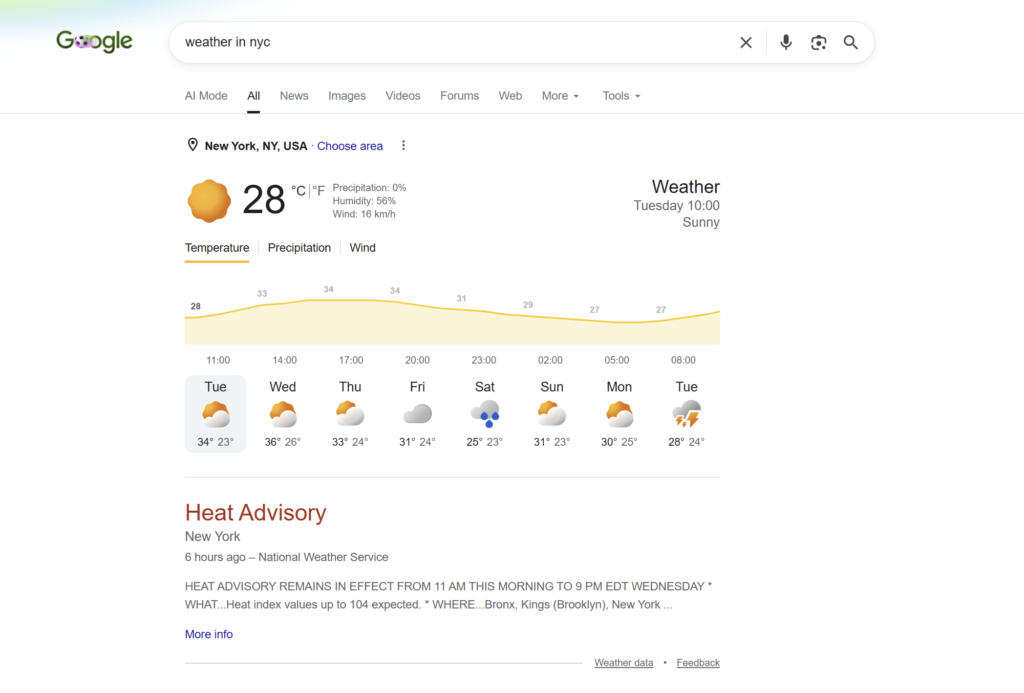
1. Direct Answer Box
Provides an immediate factual answer (weather, time, conversions) with no need to click on anything. It removes simple informational queries from the click-based ecosystem entirely.
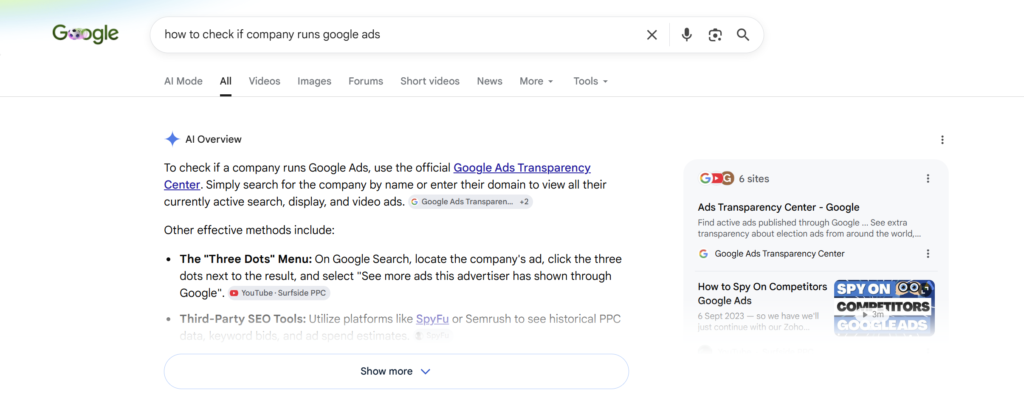
2. AI Overviews
Summarizes information from multiple sources into a single AI-generated answer at the top of the SERP. It blends citation and synthesis, reducing clicks for broad and research-oriented queries.
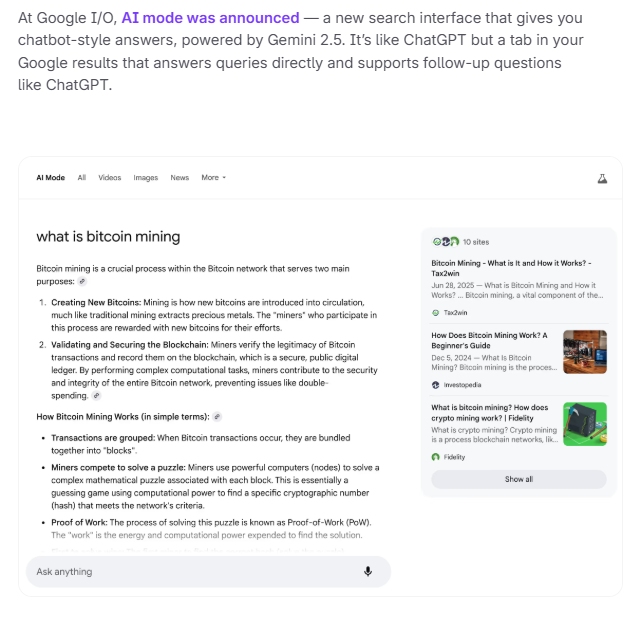
3. AI Mode
A conversational search interface that gives full chatbot-style responses inside the SERP. It shifts search behavior from navigating links to interacting with Google as an assistant.
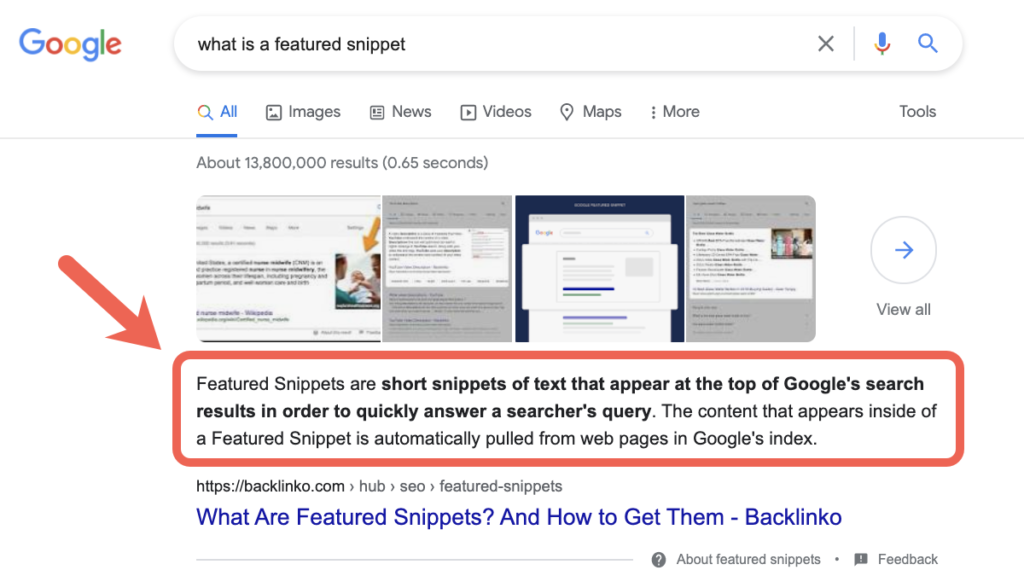
4. Featured snippet
Extracts a short piece of text from a webpage to answer the query immediately. It centralizes the answer above organic results and becomes the primary destination for informational search intent.
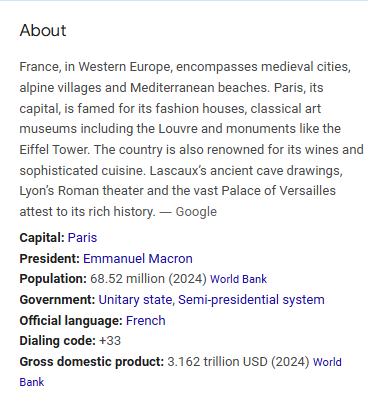
5. Knowledge panels
Display structured facts about entities such as companies, people, products, or places. They give users authoritative context upfront, reducing the need to explore additional pages.
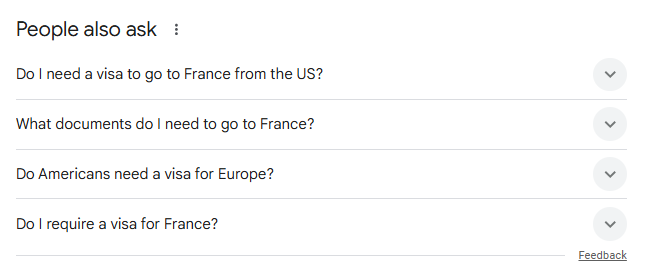
6. People Also Ask
Surfaces related questions with expandable instant answers. It replaces multi-click browsing with a self-contained Q&A journey inside the SERP.
7. From sources across the web (FSATW) module
Aggregates insights from multiple websites into themed attributes or benefits. It removes the need for users to open individual sources by presenting the full comparison directly in the SERP.
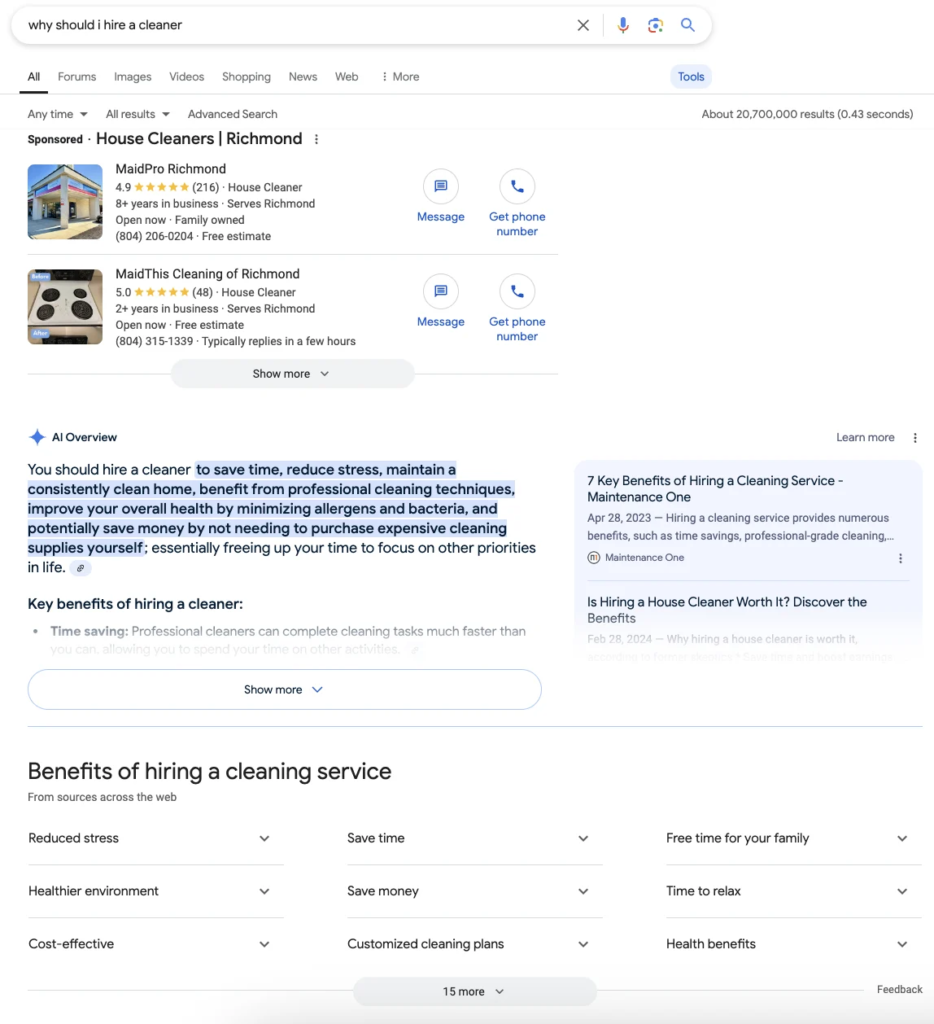
Together, these features show how much of the search journey now happens before a user ever reaches a website. Google resolves factual, exploratory, and comparative queries directly in the results page, which means brands compete for visibility inside modules rather than just within organic listings. Understanding how these features work is only the first step; the next is learning how to evaluate your actual presence across them, since traditional traffic metrics no longer reflect the full picture of search visibility.
How to measure visibility beyond traffic
Because several independent datasets now agree that a majority of searches end without a click and that AI Overviews can halve click‑throughs even for #1 results, measuring only traffic misses most of what is actually happening in search. Zero‑click SEO requires visibility metrics that live inside the SERP and AI answers, not just in analytics dashboards.
Because clicks no longer represent how often users encounter your brand, visibility needs to be measured inside the SERP itself. Zero-click search requires metrics that capture presence in AI Overviews, snippets, entity panels, and other features where users consume information without leaving Google. The following three frameworks offer a practical way to quantify this visibility and understand how strongly your brand shows up across modern search results:
- Share of SERP presence
- Entity coverage
- Brand mentions in AI results
Share of SERP presence
Share of SERP presence measures how much total SERP visibility your brand captures across all features for a keyword category. Unlike the share of search—which counts only one appearance per keyword—this metric reflects every placement available in modern SERPs (AI Overviews, PAA, snippets, organic listings, etc.).
How it Works
- Category SERP volume = search volume × total SERP features for each keyword, summed across the category.
- Brand SERP volume = search volume × number of SERP features that include your brand, summed across the category.

Example
- Category SERP volume = 4,090,700
- Brand SERP volume = 1,374,500
- Share of SERP presence = 33.6 percent
You can also calculate this per keyword to identify where your strongest visibility opportunities lie.
Entity coverage
Entity coverage indicates how well Google associates your brand with the entities that matter for Zero-Click SEO. Google relies on entities (not keywords) to understand queries, build Knowledge Panels, and generate AI answers, so broader entity recognition leads to more SERP visibility without clicks.
Google connects your brand through:
Primary entities
Entities directly tied to your business (company name, brands, products, people). These can appear as Knowledge Panels, even for variations or abbreviations.
Secondary entities
Related entities that cite your website inside their Knowledge Panels. These show how Google maps your brand to broader topics and products.
Entity coverage calculation
- List all primary entities and their search variations.
- Check which variations trigger Knowledge Panels to find coverage gaps.
- Use tools (e.g., Semrush → Knowledge Panel filter) to find all queries where your site appears in Knowledge Panels as a related/secondary entity.
Metric Formula (Primary Entity Coverage):

For secondary entities, track the total number of queries and entities citing your site to monitor growth over time.
Brand mentions in AI results
Tracking brand mentions in AI-generated results shows how often and in what context your brand appears across AI Overviews, AI Mode, and other conversational AI systems. Google surfaces brand visibility differently in AI Overviews (short, snippet-style answers) and AI Mode (full conversational responses), with most brands currently performing better in AI Mode. Other AI systems (ChatGPT, Claude, Copilot, Grok) behave similarly to Google’s AI Mode but differ in data sources and usage contexts.
Because each AI platform updates frequently, consistent tracking requires a structured process.
How to Track Brand Mentions in AI
- Create a fixed set of prompts where your brand should, might, and should not appear.
- Choose relevant AI platforms based on audience, geography, language, and industry.
- Monitor visibility regularly, especially after major AI model updates.
- Assess responses both quantitatively and qualitatively, noting patterns, context, and quality.
- Track competitors using the same prompts to understand relative visibility and emerging threats.
Key Metrics to Measure
- Brand mentions: Number of prompts where your brand appears.
- Citations: Whether the AI links to your content (owned, earned, or paid).
- Destinations: Types of pages cited (product, informational, PR, etc.).
- Prominence: Position of your brand in the answer.
- Sentiment: Positive, negative, or neutral.
- Share of voice (SOV): Your visibility vs competitors for the same prompt set.
- Visibility over time: How mentions change across repeated tests.
What are marketers saying about zero-click search?
As teams start applying these visibility metrics in practice, a consistent pattern emerges across SEO and marketing communities. The shift to zero-click search is not just a measurement challenge but a real operational one, reflected in the concerns, questions, and experiences practitioners share every day. Discussions across Reddit, SEO forums, and industry groups reveal how professionals are adapting to reduced clicks, evolving SERP behavior, and the growing influence of AI-generated answers.
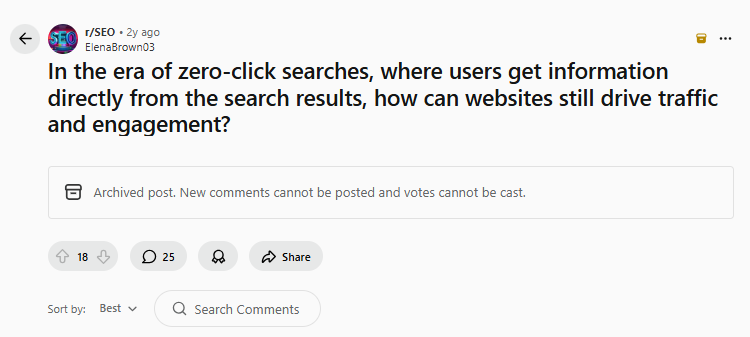
1. Traffic loss is the biggest fear
Marketers worry that AI Overviews, snippets, and rich results reduce clicks, impressions, and discoverability. Some report fewer impressions but higher-quality traffic, noting that zero-click filters out unqualified users.
Across SEO communities, the day‑to‑day stories now mirror what the large studies show: impressions go up while CTR and raw sessions decline, especially on AI‑heavy SERPs. In case studies highlighted by Semrush, websites have doubled impression volume yet seen CTR fall from around 1.5% to under 0.5% as AI Overviews and rich results took more on‑SERP space.
2. The strategic shift: visibility > clicks
Many acknowledge that winning now means appearing inside the answer, not just ranking. SEO discussions repeatedly highlight the move from SEO → AEO → GEO and the need to be cited by AI systems.
3. Entity-first SEO is now mainstream
Marketers are increasingly focusing on entity optimization, structured data, digital PR, and strong off-site signals as the foundations of AI visibility.
4. Everyone wants to know how to get cited in AI
Threads are full of questions about:
- structuring content for AI Overviews and LLMs
- tracking citations across ChatGPT, Claude, Perplexity, and others
- closing citation gaps against competitors
5. The winning content formats are consistent
Marketers repeatedly point to structured Q&A, FAQ blocks, concise snippet passages, and comprehensive content hubs as the formats AI prefers.
6. Diversification is now mandatory
With zero-click formats dominating SERPs, teams are increasing focus on email, YouTube, social media, and branded communities while reducing reliance on Google traffic alone.
7. Measurement is evolving
Practitioners are updating KPIs to focus on impressions, mentions in AI answers, presence in snippets and overviews, and sentiment inside AI-generated responses.
Why This Matters for 42DM’s Approach
The industry is still adapting to a world where entity strength, answer level visibility, and AI citations define success. Our SAIO frameworks already integrate these practices and help brands grow in a zero-click environment.
Zero-click strategies overview
Winning in a zero-click environment requires shifting SEO from a click-driven model to a visibility-driven model. The goal is to ensure your brand is surfaced, recognized, and trusted directly inside the SERP, even when the user never reaches your site. Across industry experts, several core strategies consistently appear.
1. Own direct answers and structure content for extraction
Zero-click SERP features reward content that is easy for search engines to extract and display. The most effective approach is to design content that gives short, factual, high clarity answers at the top, followed by supporting depth.
Effective tactics include:
- Start sections with one sentence definitions or answers
- Use H2 or H3 question formats and answer them immediately
- Add concise summaries, tables, and lists that Google can lift into snippets
- Integrate FAQs across commercial and informational pages
This aligns with Neil Patel’s recommendation to “give Google the easiest possible answer to use” and with the widespread emphasis on question-based formatting.
2. Capture featured snippets and People Also Ask positions
Featured snippets and People Also Ask blocks are key drivers of zero-click visibility. Brands that win snippets often retain or even grow overall visibility even as click‑through declines, because the snippet is now the primary destination for informational intent.
To maximize your chances of capturing these, focus on long-tail, question-driven keywords, analyze SERP intent, and reformat existing content for snippet eligibility. Competitive analysis can also help uncover snippet gaps, ensuring you stay ahead of competitors. Research shows that brands capturing snippets gain an impression share, even when clicks decline.
3. Strengthen structured data and schema usage
Structured data, such as schema markup, is one of the strongest levers for zero-click placement. It helps Google understand entities, relationships, and attributes, increasing visibility in rich results. Focus on key schema types like FAQ, HowTo, Product, Organization, and LocalBusiness, all of which are integral to modern SERP visibility and AI-driven answers.
4. Optimize for entity-based search and knowledge graphs
Zero-click search is increasingly entity-driven. Search engines pull from knowledge graphs rather than individual documents.
Priority actions include:
- Strengthen entity signals (Organization, Person, Product, Location)
- Standardize naming, NAP, brand phrasing, and product vocabulary
- Build clear internal linking that reflects entity relationships
- Publish content that reinforces your topical authority around your core entities
This supports both traditional SERPs and AI Overviews.
5. Align content with search intent variations
Zero-click triggers vary depending on search intent. Informational queries often result in snippets, while commercial queries trigger carousels and reviews. Transactional queries may lead to local packs or shopping modules. Your strategy should align with the SERP reality, knowing when to compete for clicks, fight for visibility, or leverage zero-click features to build brand recall. Not every query is worth competing for in zero-click mode, so understanding intent is crucial.
6. Develop conversational content for voice and AI answers
As voice search and AI-driven responses gain traction, it’s important to optimize for conversational content. Focus on natural question phrasing, short sentence structures, and clear fact-based answers. These adjustments will help your content perform well in voice-driven queries and AI Overviews, which continue to see growth in usage.
7. Focus on impression share, not clicks
In zero-click environments, impressions, position, and brand mention frequency become the core KPIs. Traffic becomes secondary.
New KPIs to track include:
- Presence in SERP features
- Share of SERP presence
- Brand mentions in AI results
- Visibility across entity modules
- Impressions in Discover, SGE, PAA
- Citations in AI chat responses
This shifts SEO from traffic acquisition to visibility optimization.
8. Build zero-click safe pages to convert impression-based users
Landing pages must be optimized for users who arrive with partial context from zero-click search results. Include structured FAQs, comparison tables, social proof, and strong CTAs close to the fold. This ensures that users who click through can quickly validate your expertise and convert.
9. Strengthen off-page authority for higher extraction likelihood
Google prefers to lift content from sources with high authority and clear expertise. To strengthen signals:
- Build high-quality backlinks
- Strengthen digital PR
- Gain references in trusted publications
- Build author profiles with strong credibility signals
- Increase brand searches and user trust signals
This is highlighted across all sources as essential for snippet and AI Overview eligibility.
10. Maintain traditional SEO for bottom funnel conversions
Zero-click strategy does not replace conventional SEO. It supplements it. Organic landing pages still capture intent that Google does not fully satisfy. The goal is to protect high-value clicks while allowing low-value informational queries to become visibility plays.
Zero-Click SEO agency
Zero-click search environment requires a different kind of SEO work: not only earning traffic, but establishing presence within the SERP features and AI systems that now deliver the answers. Many teams are discovering that this shift touches content, entities, schema, analytics, and competitive monitoring simultaneously, which is why specialized support is becoming essential.
42DM has been working with these shifts for years through our AI Search methodology, which already integrates the visibility metrics covered earlier. Much of our client work has focused on improving how search engines interpret brand entities, how content is extracted into snippets and AI summaries, and how LLMs cite authoritative sources. This experience allows us to approach zero-click SEO as an evolution of work we have already been doing, rather than a sudden change.
What a Zero-Click SEO agency typically focuses on
SERP visibility
Structuring content and schema so brands appear inside AI Overviews, snippets, People Also Ask, and FSATW modules, not just organic rankings.
Entity optimization
Strengthening Knowledge Graph signals, clarifying entity relationships, and ensuring the brand is consistently recognized across topics, queries, and languages.
AI answer visibility
Monitoring how Gemini, ChatGPT, Claude, and others reference the brand and improving the likelihood of being used as a cited or synthesized source.
How 42DM approaches this work
42DM approaches zero-click SEO as a visibility systems problem, not just a rankings problem. The work starts by mapping where a brand appears across modern search surfaces—traditional organic results, AI Overviews, featured snippets, People Also Ask, knowledge panels, and AI assistants like ChatGPT, Perplexity, and Gemini—then identifying the gaps between where the brand ranks and where buyers actually encounter answers.
From there, the team focuses on three connected layers. First, SERP and AI visibility diagnostics: measuring share of presence, entity coverage, citation patterns, and competitor visibility across prompt sets and keyword clusters. Second, content and structure optimization: rebuilding pages and content hubs so they are easy for search engines and LLMs to interpret, extract, and cite, including conversational content formatting, website structure improvements, schema implementation, and gap-closing against competitor content. Third, authority and trust reinforcement: strengthening the signals that make a brand more likely to be surfaced in AI answers in the first place, from topical depth and consistency to supporting credibility assets.
The practical goal is not to chase traffic at any cost. It is to make sure a brand is visible inside the answer layer where discovery and comparison increasingly happen. That means 42DM measures success across citation visibility, non-branded discovery, AI-sourced traffic, and downstream organic growth—not only raw clicks from classic blue links.
If you want to explore how these approaches can apply to your brand, you can contact us, and we will be happy to discuss your case!
FAQ