UNBOUND 2026 was the first edition of HubSpot’s flagship conference under its new name. After 15 years as INBOUND, HubSpot expanded the framing around the event to reflect how growth now works across marketing, sales, service, operations, and AI.
I spent three days in Boston moving between sessions, AEO talks, and expo-floor conversations. What stood out was not one product launch or one framework. It was the way several shifts are starting to converge: AI is changing how buyers discover vendors, organic traffic is becoming a less complete measure of success, distribution is spreading across more surfaces, and trust is becoming harder to separate from visibility.
Here are the takeaways I think matter most for B2B marketing teams.
TL;DR: five takeaways from UNBOUND 2026
- AI is becoming part of vendor discovery before buyers reach your website.
- Organic traffic alone tells less of the story than it used to.
- Owned, earned, and paid distribution need to work together.
- Original evidence and brand trust matter more as generic content gets cheaper.
- AI makes execution faster, which raises the value of better judgment upstream.
For the event’s history and our year-by-year coverage, see the HubSpot UNBOUND conference hub.
What changed from INBOUND to UNBOUND in 2026?
HubSpot announced the rename in April 2026. Its explanation was that modern growth no longer fits inside one inbound methodology or one team. Marketing, sales, service, operations, and AI now influence the same customer journey.
That broader remit was visible throughout the event. The conversation was less about generating more inbound traffic and more about how buyers discover brands, how teams use customer context, how agents fit into GTM workflows, and how visibility connects to pipeline. Read HubSpot’s explanation of the INBOUND-to-UNBOUND change
1. AI is moving upstream in the B2B buying process
AEO was one of the most repeated themes across the sessions I attended.
The useful takeaway was not that every B2B team suddenly needs a new channel. It was that part of the buyer journey is now happening inside AI interfaces before a website visit ever occurs.
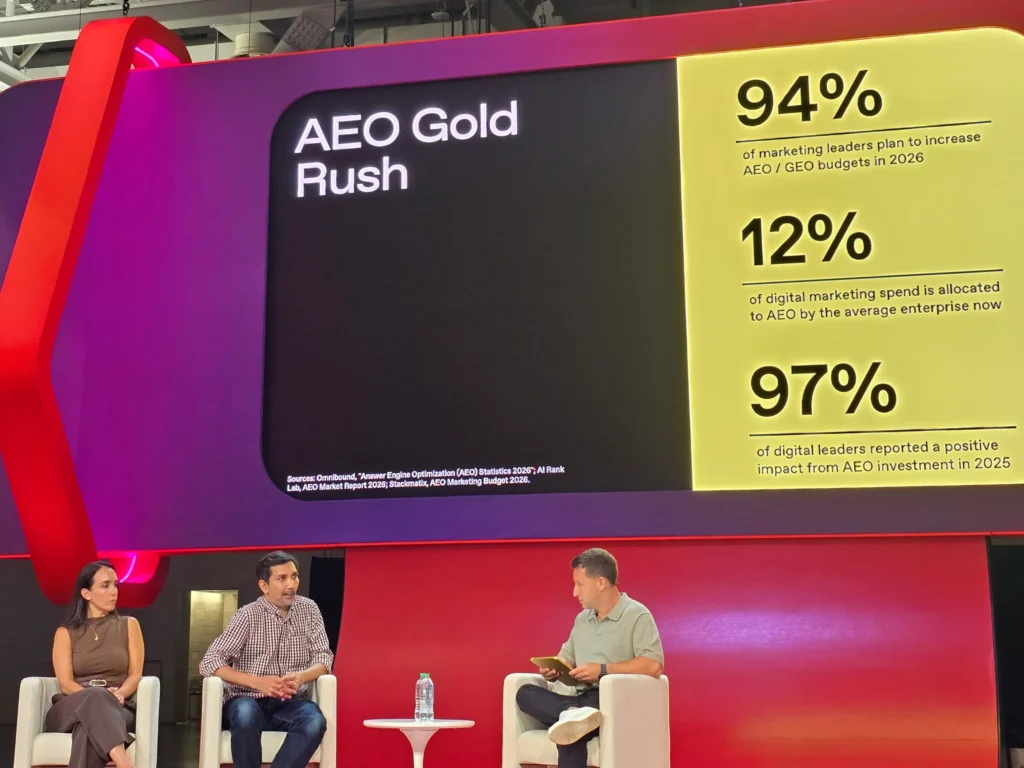
Image: UNBOUND26, Winning When Buyers Never Click | Tori Murray, Head of Paid Growth @ Quo; Andy Schonfeld, Chief Revenue Officer @ Tatari; Zaw Lin Hteik, Head of Growth Acquisition @ Otter.ai | Photo: 42DM
Buyers can ask AI tools to compare products, shortlist vendors, explain trade-offs, and summarize categories. That changes what marketing teams need to understand about their visibility.
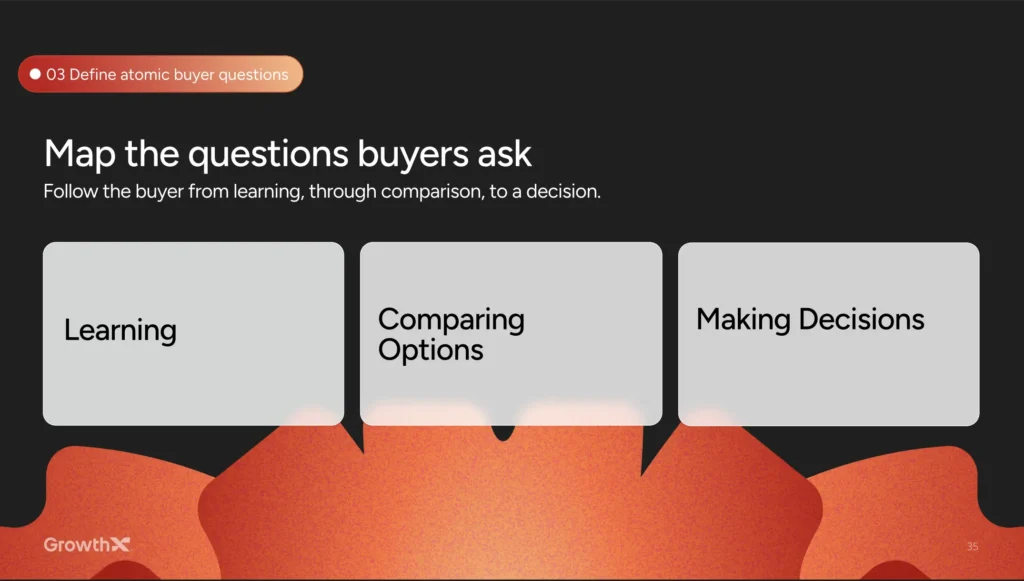
Image: UNBOUND 2026 Slide Deck, Slide 35, What 10,000 Hours of AEO Taught Us | Marcel Santilli, CEO @ GrowthX AI
I would ask six questions:
- Can AI find the company?
- Does it understand what the company actually does?
- Does it describe the product accurately?
- Does it know who the product is for?
- Can it find credible evidence outside the company’s own website?
- Does the buyer recognize and trust the brand when it appears?
That is why I see AEO as part of the buying system, not simply another content tactic.
In our recent webinar with Gumshoe, we broke the work into six dimensions: foundation, content, authority and trust, distribution, conversion, and measurement. Watch: How Top B2B Brands Get Cited by AI
2. Traffic is becoming a weaker proxy for marketing performance
One chart stayed with me after the conference.
In HubSpot’s Loop session, Kipp Bodnar showed that HubSpot had lost a large share of website traffic while lead volume increased. I would treat that as HubSpot’s own experience, not as a benchmark for every B2B company.
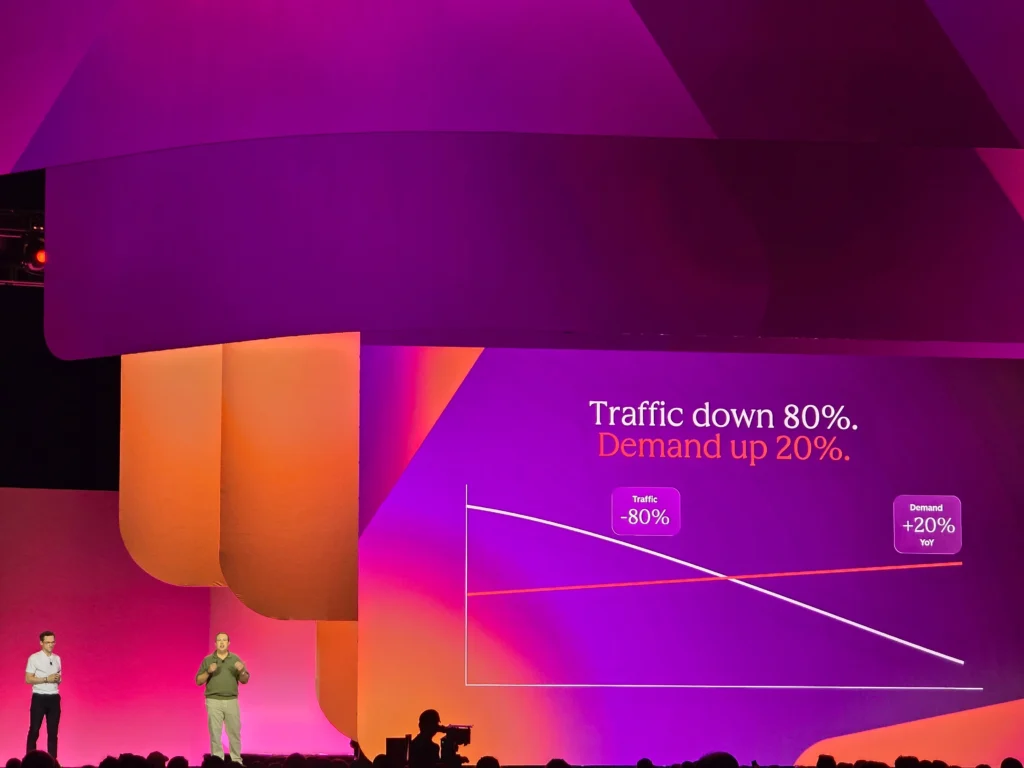
Image: AI Broke The Old Marketing Playbook. Here’s What Replaces It | Kipp Bodnar, Chief Marketing Officer @ HubSpot | Photo: 42DM
But the direction is important.
More research now happens before a buyer reaches a website. AI answers, social platforms, reviews, communities, and paid distribution can all shape the shortlist before analytics records a session.
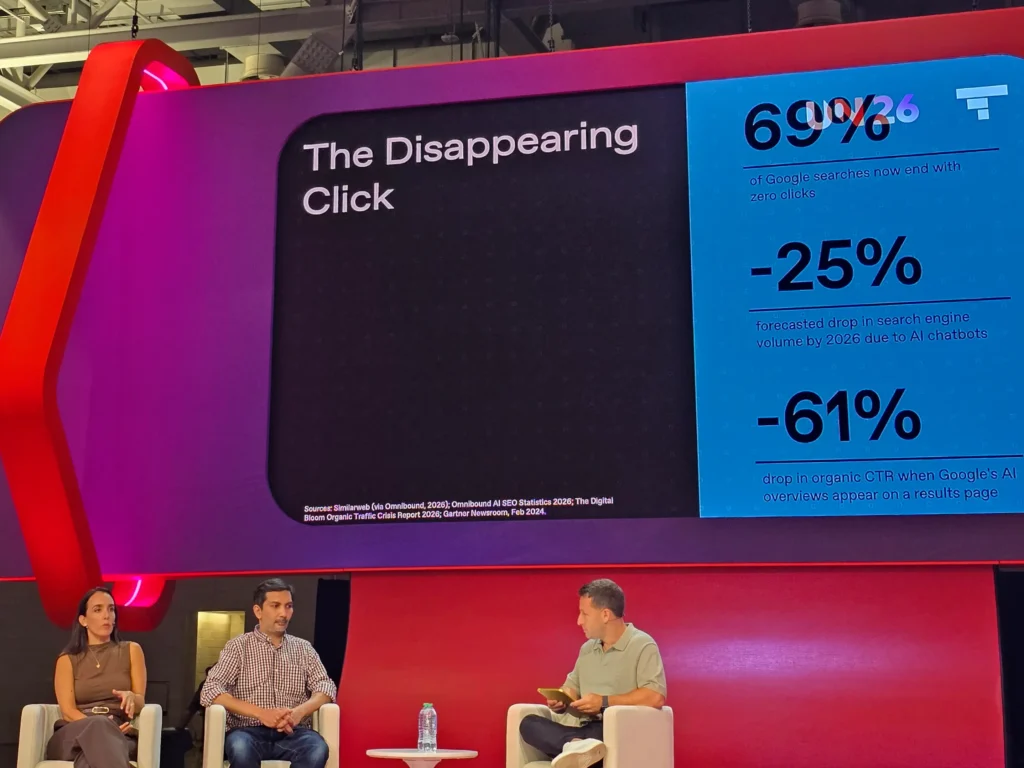
Image: UNBOUND26, Winning When Buyers Never Click | Tori Murray, Head of Paid Growth @ Quo; Andy Schonfeld, Chief Revenue Officer @ Tatari; Zaw Lin Hteik, Head of Growth Acquisition @ Otter.ai | Photo: 42DM
That means traffic still matters, but it needs context.
The better questions are:
- Are the visitors qualified?
- Are they arriving with stronger intent?
- Are they moving into opportunities?
- Are branded searches increasing even when non-branded clicks fall?
- Are buyers telling us they discovered the company through AI or another off-site source?
For me, that is the measurement shift behind a lot of the AEO conversation.
3. Distribution now has to combine owned, earned, and paid
Another strong theme was distribution.
Owned, earned, and paid channels increasingly have different jobs in the same system.
- Owned is where the company explains its product, positioning, audience, and proof.
- Earned is where buyers and AI systems find corroboration through reviews, media, third-party lists, expert commentary, and customer evidence.
- Paid creates deliberate reach in an environment where organic distribution is less predictable.
The mistake is treating those as separate plans.
If your site explains one thing, your reviews imply another, and your paid campaigns optimize for a third, the market receives fragmented context. The same problem appears in AI answers.
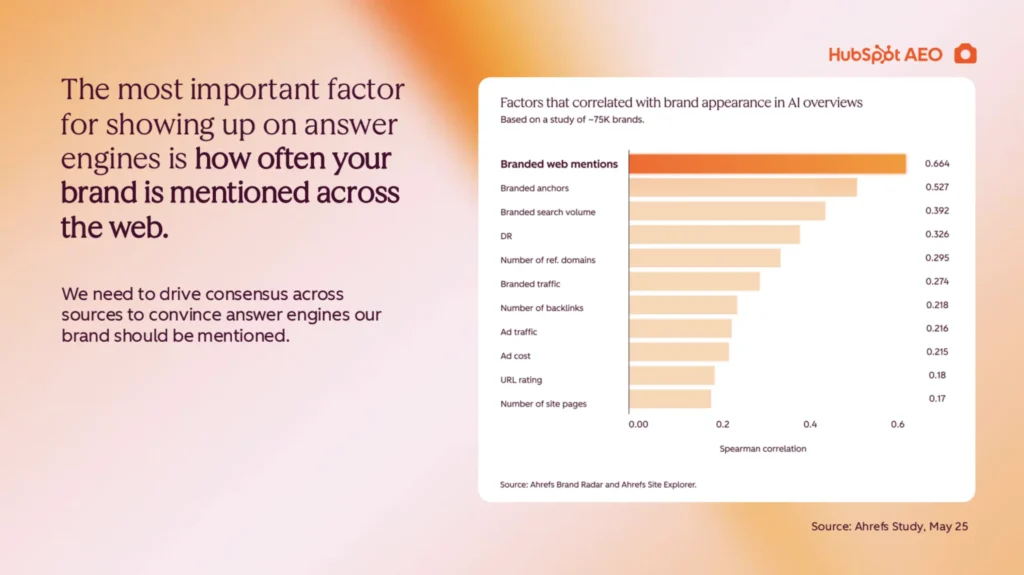
Image: UNBOUND 2026 Slide Deck, Slide 1 Stop the Silent Traffic Drop: A Hands-On AEO Playbook | Beeri Amiel, Sr Product Director @ HubSpot; Bradley Sanders, Associate Product Manager @ HubSpot; Elliott Braund, VP, Revenue Operations @ Fresha
The companies that are easiest to understand tend to be the ones that repeat the same core truth across multiple credible surfaces.
4. Generic thought leadership is becoming easier to ignore
Marcus Sheridan asked one of the best questions I heard all week: is your company a primary source on its topic, or is it summarizing what everyone else already knows?
That question matters more now because synthesis is cheap.
AI can already produce a competent summary of an established topic in seconds. What it cannot manufacture is evidence your company actually owns.
That includes:
- proprietary data;
- customer outcomes;
- named expert opinions;
- first-hand experience;
- original frameworks;
- strong trade-off decisions.
This is one reason we are pushing our own content at 42DM further toward research, client patterns, and frameworks grounded in work we have actually done. Explore the 42DM GTM Benchmark Research
5. Trust is becoming part of visibility
A technically perfect page cannot compensate for weak or contradictory evidence elsewhere.
If a company’s website says one thing, review platforms say another, and external proof is thin, AI systems and buyers both have less reason to trust the claim.
That makes trust part of AEO.
The useful questions become:
- Are our product and company facts consistent?
- Is pricing guidance clear enough to evaluate?
- Do customer reviews support the use cases we want to win?
- Are experts and authors identifiable?
- Do third-party sources confirm what we claim?
Our AI visibility research looks at this problem across different answer engines and measurement signals. Read the 42DM AI Visibility Report
What did the AEO sessions actually agree on?
There were plenty of tactical differences, but the useful common ground was surprisingly consistent.
1. Start with buyer questions, not prompt volume
The best starting point is not a giant prompt list. It is the questions real buyers ask at different stages of evaluation.
Use sales calls, support tickets, Search Console queries, community discussions, competitor comparisons, and review language to build that map.
2. Fix the truth layer before scaling content
Make sure the company, product, audience, pricing, use cases, and proof are represented consistently across your site and external profiles.
If the underlying context is fragmented, publishing more content simply scales the inconsistency.
3. Fix the boring technical basics
Broken internal links, poor heading structure, missing metadata, redundant pages, and weak crawlability still matter.
AEO does not replace technical SEO. It adds another retrieval layer on top of it.
4. Strengthen the pages that already matter
The conference reinforced something I agree with strongly: improving existing high-value pages is often more useful than publishing another wave of generic articles.
Start with pricing, comparisons, product pages, category pages, research, and the commercial articles that already attract qualified demand.
5. Build evidence beyond your own website
Your own site establishes the claim. The rest of the web helps prove it.
That means customer reviews, third-party coverage, expert interviews, YouTube, industry publications, and other credible sources can all influence whether a brand is mentioned or cited.
6. Measure visibility by persona and engine
There is no stable “position three” in ChatGPT.
Different engines return different answers, and the same engine can vary from run to run. So I would track mention rate, citation rate, share of voice, accuracy, persona-level visibility, AI-referred traffic, self-reported attribution, and pipeline rather than one headline ranking.
Which tools stood out on the expo floor?
I looked at the tools through one filter: does this solve a real GTM problem, or is it simply an impressive demo?
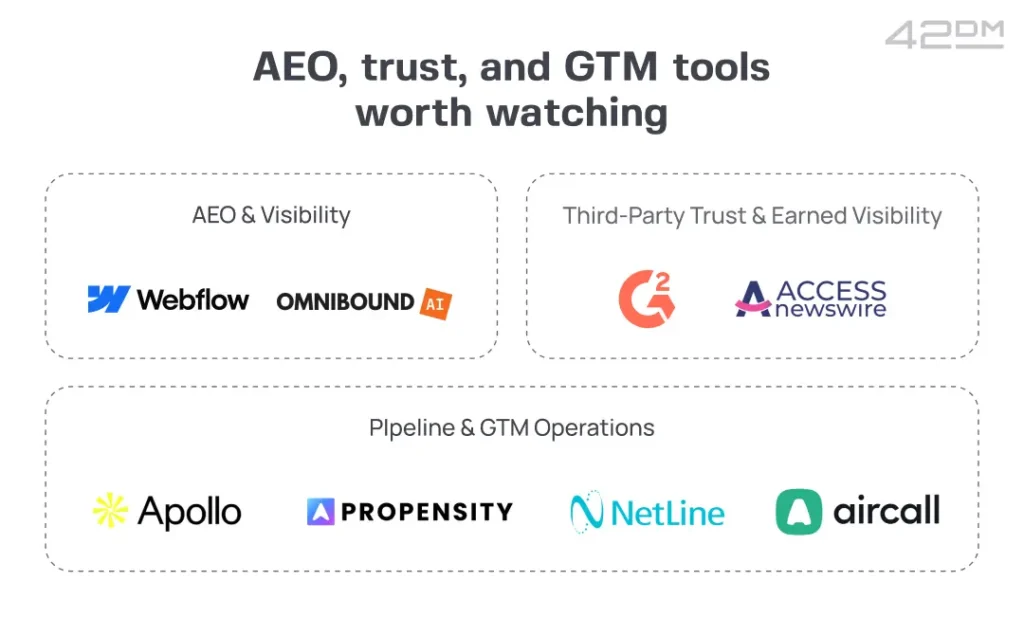
AEO and AI visibility
- Webflow stood out for connecting AEO to site structure, content quality, and measurable experiments rather than reducing it to prompt tracking.
- Omnibound AI was interesting because it tracks visibility by ICP and persona. That matters in B2B, where a technical evaluator and a CMO can receive very different answers about the same company.
Third-party trust and earned visibility
- G2 remains important because reviews are part of how buyers validate claims, and increasingly part of the evidence AI systems can find.
- ACCESS Newswire is interesting because its positioning already includes AI visibility and citation measurement, showing how quickly PR infrastructure is adapting to answer engines.
Pipeline and GTM operations
- Apollo continues moving toward an all-in-one prospecting, enrichment, and sequencing workflow.
- Propensity remains interesting for lean B2B teams that want account and contact-level intent without building a huge ABM stack.
- NetLine caught my attention because qualification can be built into content syndication rather than optimizing only for lead volume.
- Aircall is a good example of AI agents moving into actual operations: voice workflows that can update CRM records, create tickets, and book meetings.
The point is not that every company needs these tools. The better question is whether the tool improves a specific decision or workflow your team already knows matters.
Where I think the conference conversation still fell short
UNBOUND was strong on execution.
There was a lot of useful discussion about how to structure content, deploy agents, scale creative, connect tools to HubSpot, and measure AI visibility.
What I heard much less about was the decision before execution:
- Which market deserves the bet?
- Which buyer problem is actually limiting growth?
- What should the company stop doing?
- When is AI the wrong solution?
- Which decision should remain human?
That matters because AI makes execution cheaper.
A bad decision can now be implemented faster, more consistently, and at larger scale.
The advantage therefore moves upstream: problem framing, prioritization, evidence, and judgment.
That is the part I explored more deeply in my LinkedIn article, UNBOUND 2026: What B2B Marketing Should Do Next.
What I would take back to a B2B marketing team
I would not return from UNBOUND and immediately buy a new AI stack.
I would do four things first.
1. Find the actual buying bottleneck
Is the problem discovery, understanding, trust, internal consensus, or sales follow-up?
Different problems need different interventions.
2. Fix the information layer
Make sure your company, product, audience, pricing, use cases, and proof are represented clearly and consistently where buyers and AI systems look.
3. Rebalance distribution
Owned, earned, and paid should reinforce one another rather than operate as separate channel plans.
4. Put human judgment at the start
Use AI to challenge assumptions and compare options, not only to produce output after the important decisions have already been made.
That was my strongest takeaway from Boston.
AI is making execution faster. The advantage will belong to teams that get better at deciding what is worth executing.
For more year-over-year context, see our HubSpot UNBOUND conference hub and the previous INBOUND 2025 recap and INBOUND 2024 recap.
For the wider event calendar, see our B2B Marketing Conferences 2026 guide.
FAQ